
Crypto Reputational Risk in the Enterprise: 2026 Guide

Crypto reputational risk in the enterprise is defined as the potential for an organization’s standing to suffer material harm because of its involvement with cryptocurrency or digital assets, triggered by regulatory enforcement, counterparty failures, or negative public perception. This risk category sits within the broader digital asset risk framework, which identifies reputational damage as one of the most underestimated threats facing traditional enterprise risk teams. Unlike credit or market risk, reputational damage compounds quickly. A single enforcement action, a custodian collapse, or a wave of negative media coverage can erode institutional trust in days. For corporate risk managers and compliance officers, understanding what is crypto reputational risk enterprise means recognizing it as a governance problem first and a communications problem second.
What is crypto reputational risk in the enterprise context?
Crypto reputational risk is not simply bad press. It is the downstream consequence of governance failures, and it shows up in measurable ways: institutional capital withdrawals, regulatory sanctions, and loss of banking relationships. The ISO 31000 and COSO ERM frameworks both treat reputational risk as an output of inadequate risk identification and control, not as a standalone communications challenge. Enterprises that treat it as a marketing problem consistently misallocate resources.
The causes fall into three categories. Regulatory enforcement actions, such as SEC or FinCEN investigations, signal to institutional investors that governance controls are insufficient. Counterparty failures, including exchange insolvencies or custodian breaches, create guilt by association even when an enterprise played no direct role. Negative public perception, particularly around crypto’s energy consumption and links to illicit finance, generates reputational drag that affects board-level decisions and investor relations.
Enterprise reputational risk is often a symptom of governance failure rather than public opinion alone. Institutional capital tracks governance signals like custody integrity and audit readiness far more closely than brand sentiment scores. That distinction matters enormously for how you allocate risk management resources.
What unique factors drive crypto reputational risk for enterprises?
Several structural features of digital asset markets amplify reputational risk beyond what traditional finance produces.
Extreme volatility and contagion effects. Digital assets carry annual volatility of 50–200%, compared to 5–15% for bonds. Major coins can move 15–30% in a single day, several times per year. That volatility creates contagion: when one major counterparty fails, the reputational fallout spreads to every enterprise associated with that ecosystem, regardless of direct exposure.

Fast failure modes in counterparties. Crypto exchanges, custodians, and OTC desks can fail within hours, not the months that traditional financial institutions typically take to unwind. An enterprise holding assets on a platform that collapses faces immediate reputational questions about its due diligence practices, even before any regulatory inquiry begins.
Regulatory uncertainty as a permanent condition. The SEC, CFTC, and FinCEN each assert jurisdiction over different aspects of digital assets in the US. The EU’s MiCA framework and Singapore’s MAS licensing regime create additional compliance layers for enterprises operating across borders. Regulatory ambiguity means that what is compliant today may attract scrutiny tomorrow, and that uncertainty itself becomes a reputational signal to institutional investors.
Blockchain transparency cuts both ways. The immutable public record of blockchain transactions means that any association with flagged wallets, sanctioned addresses, or illicit flows is permanently visible. That transparency creates accountability, but it also means past errors cannot be quietly corrected.
- Association with illicit activity, even indirect, triggers automatic AML red flags for banking partners.
- Environmental concerns around proof-of-work mining remain a board-level reputational issue for enterprises with public ESG commitments.
- Negative media coverage of crypto broadly affects all enterprises in the space, not just those directly implicated.
- AI-driven narrative monitoring is now critical because a single incident can permanently associate a firm with a crisis through AI model associations in search results.
Pro Tip: Build a crypto volatility workflow that includes reputational triggers, not just price thresholds. When volatility spikes, your communications and compliance teams should activate alongside your trading desk.
How is crypto reputational risk measured and managed at the enterprise level?
Measurement starts with institutional capital flows, not sentiment surveys. By mid-2026, a 15% institutional withdrawal from a crypto platform signals severe reputational damage, while a 5% net deposit signals recovery. Those thresholds give compliance officers a concrete, quantifiable metric that connects directly to governance quality.
The following framework covers the core management layers:
-
Governance signals. Custody integrity, compliance audit readiness, and third-party validation are the primary signals institutional investors track. Enterprises must document custody arrangements, conduct regular internal audits, and engage external validators before incidents occur, not after.
-
Compliance transparency. KYC and AML practices must be documented, current, and available for regulatory review at short notice. Proactive disclosure of compliance programs to institutional counterparties builds trust faster than any marketing campaign.
-
Operational controls. Security architecture, smart contract audits for DeFi-adjacent activities, and continuous transaction monitoring form the technical foundation of reputational defense. A breach that could have been prevented by a standard security audit is a governance failure, not just a technical one.
-
Real-time narrative monitoring. Organizations must monitor how AI models describe them daily, beyond traditional media monitoring. Standard AI search engines can permanently associate a firm with a crisis after a major incident. Daily monitoring allows enterprises to identify and correct false or damaging narratives before they calcify.
-
Stress testing and incident response. Tabletop exercises that simulate a counterparty failure, a regulatory inquiry, or a security breach reveal gaps in response protocols before those gaps become public. Rehearsed incident response is a measurable governance control.
Pro Tip: Assign a named owner for AI narrative monitoring in your risk register. This is not a communications task. It belongs in your operational risk function alongside transaction monitoring.
| Management layer | Primary metric | Review frequency |
|---|---|---|
| Institutional capital flows | Net deposit/withdrawal rate | Weekly |
| Compliance audit readiness | Audit completion rate | Quarterly |
| Operational security | Incident count and severity | Monthly |
| AI narrative monitoring | Flagged associations in AI outputs | Daily |
| Incident response readiness | Tabletop exercise completion | Biannually |
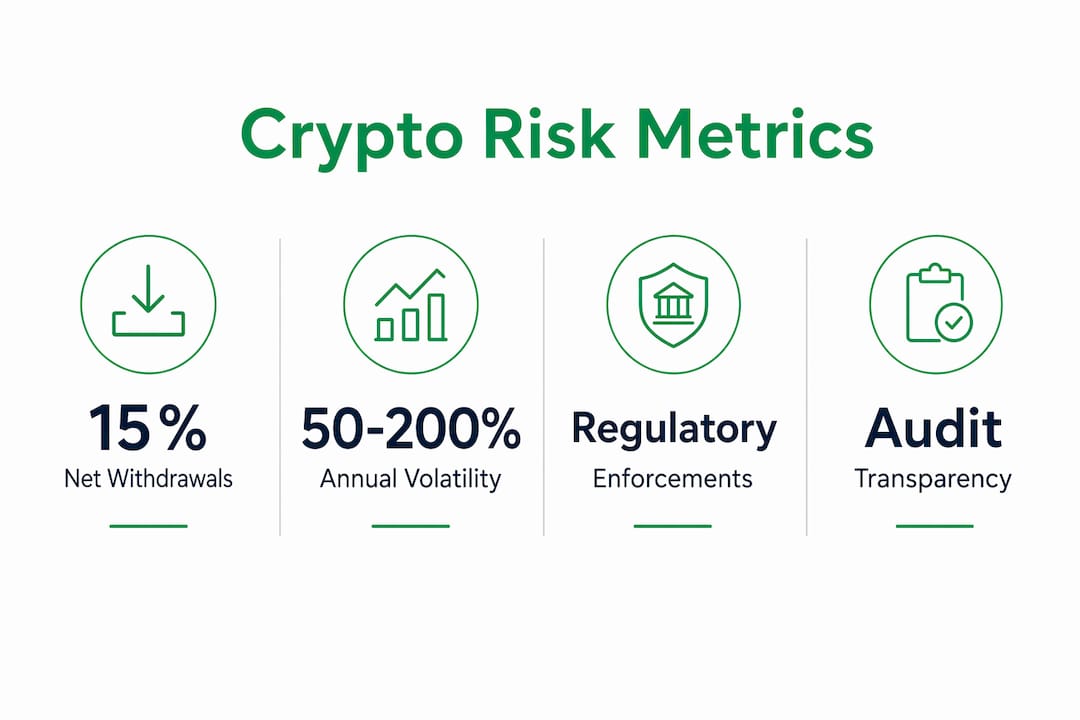
Operational transparency and custody security turn reputation from a marketing concern into an operational imperative. Enterprises that publish transparency reports and maintain clean audit trails attract institutional capital more reliably than those that invest in brand campaigns.
How do regional regulations shape enterprise crypto reputation strategies?
Regulatory jurisdiction determines which reputational risks are most acute for your enterprise, and the differences across regions are significant.
United States. The SEC, CFTC, and FinCEN each regulate different aspects of digital assets, creating overlapping compliance obligations. Institutional investors in the US prioritize SEC guidance and audit readiness when evaluating enterprise crypto counterparties. A notable 2026 development: the FDIC and OCC codified the elimination of reputational risk as a formal supervisory metric in US banking programs. That change reduces the subjective use of reputational risk as an enforcement tool and may ease traditional banking access for compliant crypto enterprises.
European Union. MiCA creates a unified licensing and disclosure framework across EU member states. Enterprises operating under MiCA must publish detailed whitepapers, maintain ongoing regulatory disclosures, and meet specific custody and reserve requirements. Compliance with MiCA functions as a reputational signal to European institutional investors.
Asia-Pacific. Singapore’s MAS and Hong Kong’s SFC operate licensing regimes that institutional investors treat as quality filters. A MAS license or SFC approval signals governance credibility in APAC markets. Enterprises without regional licensing face reputational disadvantages when competing for institutional mandates in those markets.
- US enterprises: prioritize SEC cooperation, FinCEN AML compliance, and proactive audit disclosure.
- EU enterprises: align with MiCA disclosure requirements and publish compliance reports publicly.
- APAC enterprises: pursue MAS or SFC licensing as a primary institutional trust signal.
- Global enterprises: map regulatory exposure by jurisdiction and maintain separate compliance documentation for each region.
The emerging best practice across all regions is proactive publication of compliance and audit reports. Enterprises that disclose their governance posture before being asked build institutional trust faster than those that respond only to regulatory requests.
What practical steps can enterprises take to mitigate crypto reputational risk?
Managing reputational risk in digital assets requires embedding it in your existing enterprise risk governance structure, not treating it as a separate communications function.
-
Align your digital asset risk framework with ISO 31000 and COSO ERM. Both frameworks require risk identification, assessment, treatment, and monitoring. Reputational risk from crypto activities belongs in each of those stages, with named owners and documented controls.
-
Embed reputational risk in board reporting. Boards that fail to incorporate evolving digital asset risk categories face increased directors and officers liability exposure. Quarterly board reports should include institutional capital flow metrics, compliance audit status, and any active regulatory inquiries.
-
Conduct proactive regulatory risk audits. Schedule audits before regulators request them. Publish remediation plans when gaps are identified. That sequence, audit then disclose, signals governance maturity to institutional investors and regulators alike.
-
Hire compliance staff with jurisdiction-specific expertise. A compliance officer who understands FinCEN requirements may not understand MiCA obligations. Enterprises operating across borders need staff who can navigate each regime without relying on external counsel for routine decisions.
-
Maintain third-party audit partnerships and publish transparency reports. Compliance signals to investors are most credible when validated by independent third parties. Annual transparency reports that include custody arrangements, security architecture, and compliance audit results build institutional confidence over time.
-
Monitor institutional capital flows weekly. Use net deposit and withdrawal rates as your primary reputational health metric. Unusual outflows warrant immediate investigation of the governance signals driving them.
-
Deploy AI narrative monitoring as an operational control. Assign daily monitoring of AI-generated descriptions of your enterprise to your operational risk function. Correct false associations through proactive disclosure and media engagement, not reactive press releases.
-
Plan post-incident recovery campaigns in advance. Enterprises with documented recovery playbooks restore institutional confidence faster than those improvising under pressure. Recovery plans should include disclosure timelines, regulatory notification protocols, and institutional investor communication sequences.
Pro Tip: Treat your digital asset disclosures as a standing governance document, not a one-time filing. Update them whenever your custody arrangements, counterparty relationships, or compliance posture changes materially.
Key Takeaways
Crypto reputational risk in the enterprise is a governance problem that manifests as a capital and regulatory problem, and managing it requires treating transparency as an operational control, not a communications strategy.
| Point | Details |
|---|---|
| Governance drives reputation | Reputational damage signals governance failure; custody integrity and audit readiness are the primary institutional trust metrics. |
| Capital flows are the key metric | A 15% institutional withdrawal signals severe reputational damage; monitor net flows weekly, not quarterly. |
| Regional compliance is non-negotiable | MiCA, SEC/FinCEN, and MAS/SFC each create distinct reputational obligations; map exposure by jurisdiction. |
| AI narrative monitoring is operational | Daily monitoring of AI-generated descriptions belongs in your risk register, not your communications team. |
| Proactive disclosure builds trust | Publishing compliance and audit reports before regulators request them accelerates institutional capital attraction. |
The governance gap nobody talks about
Gregg here. After years of working with enterprise risk teams on digital asset programs, the pattern I see most often is this: organizations spend heavily on brand and communications when their reputational risk problem is actually a governance problem. The two are not the same, and confusing them is expensive.
The firms that attract and retain institutional capital are not the ones with the best PR. They are the ones whose audit reports are clean, whose custody arrangements are documented, and whose compliance staff can answer a regulator’s question without escalating to outside counsel. Building enterprise crypto risk oversight is unglamorous work, but it is the only work that actually moves institutional capital metrics.
The 2026 regulatory shift in the US, where the FDIC and OCC removed reputational risk as a formal supervisory metric, is genuinely significant. It reduces the subjective enforcement risk that made banking relationships so fragile for crypto enterprises. But it does not eliminate the underlying governance obligations. Institutional investors still track the same signals. The change just removes one weapon from regulators’ hands.
The AI narrative problem is the one I think most enterprises are underestimating. When a major incident occurs, AI search engines encode the association between your firm and that incident into their models. That association persists long after the news cycle ends. Daily monitoring is not paranoia. It is the same discipline you apply to transaction monitoring, applied to the information environment your institutional counterparties use to evaluate you.
My honest recommendation: treat your compliance program as your reputation program. They are the same thing.
— Gregg
Wush DARE certification for enterprise crypto risk readiness
Enterprise crypto reputational risk management requires a structured framework, not ad hoc policies assembled under pressure.

Wush’s DARE certification (Digital Assets Readiness Evaluation) gives risk managers and compliance officers a recognized credential built specifically for enterprise digital asset governance. The program covers custody controls, regulatory compliance, risk management, and operational security across modular assessments with annual renewal. Enterprises that complete DARE certification demonstrate governance maturity to institutional investors, regulators, and banking partners in a format that is independently verified and blockchain-supported. If your organization is building or auditing its digital asset risk posture, DARE provides the framework and the credential to do it credibly.
FAQ
What is crypto reputational risk in an enterprise?
Crypto reputational risk in an enterprise is the potential for harm to an organization’s standing arising from its involvement with digital assets, triggered by regulatory enforcement, counterparty failures, or negative public perception. It is primarily a governance risk, not a communications risk.
How do enterprises measure crypto reputational risk?
The most reliable metric is institutional capital flow. A 15% net withdrawal from a platform signals severe reputational damage, while a 5% net deposit signals recovery, making capital flows a more objective measure than brand sentiment surveys.
Why does blockchain transparency increase reputational risk?
Blockchain’s immutable public record means any association with flagged wallets or sanctioned addresses is permanently visible to regulators, banking partners, and institutional investors, making past errors impossible to quietly correct.
How does the 2026 FDIC rule change affect enterprise crypto reputation?
The FDIC and OCC eliminated reputational risk as a formal supervisory metric in 2026, reducing subjective enforcement risk and potentially easing banking access for compliant crypto enterprises. Governance obligations to institutional investors remain unchanged.
What role does board governance play in crypto reputational risk?
Boards that fail to incorporate digital asset risk categories into governance face increased directors and officers liability exposure. Quarterly board reporting on compliance audit status and institutional capital flows is the minimum governance standard.