
The Role of HSM in Digital Asset Security

A Hardware Security Module (HSM) is a dedicated physical device that generates, stores, and manages cryptographic keys inside a tamper-resistant hardware boundary, making it the foundational control for digital asset protection. Nearly 50% of digital asset losses trace back to private-key compromise. That single statistic explains why regulators and institutional custodians treat HSMs as non-negotiable. Standards including FIPS 140-2 Level 3, PCI DSS, and eIDAS each mandate or strongly recommend HSM use for high-value cryptographic operations. The role of HSM in digital asset security goes beyond key storage. HSMs enforce authentication policies, log every key operation, and physically destroy stored keys if the device is tampered with.
How do HSMs secure cryptographic keys and enforce security policies?
HSMs protect keys by keeping them inside an isolated hardware boundary where no software process can extract them in plaintext. Key extraction is computationally infeasible inside a properly configured HSM, and every key operation is logged for auditability. That combination of hardware isolation and audit logging is what separates HSMs from software-based key management vaults.
The tamper-resistance design is the first line of defense. Physical sensors detect drilling, voltage manipulation, and temperature attacks. When a sensor triggers, the HSM executes immediate zeroization of the Local Master Key, irreversibly disabling all stored keys to prevent extraction. No attacker who physically seizes the device walks away with usable key material.
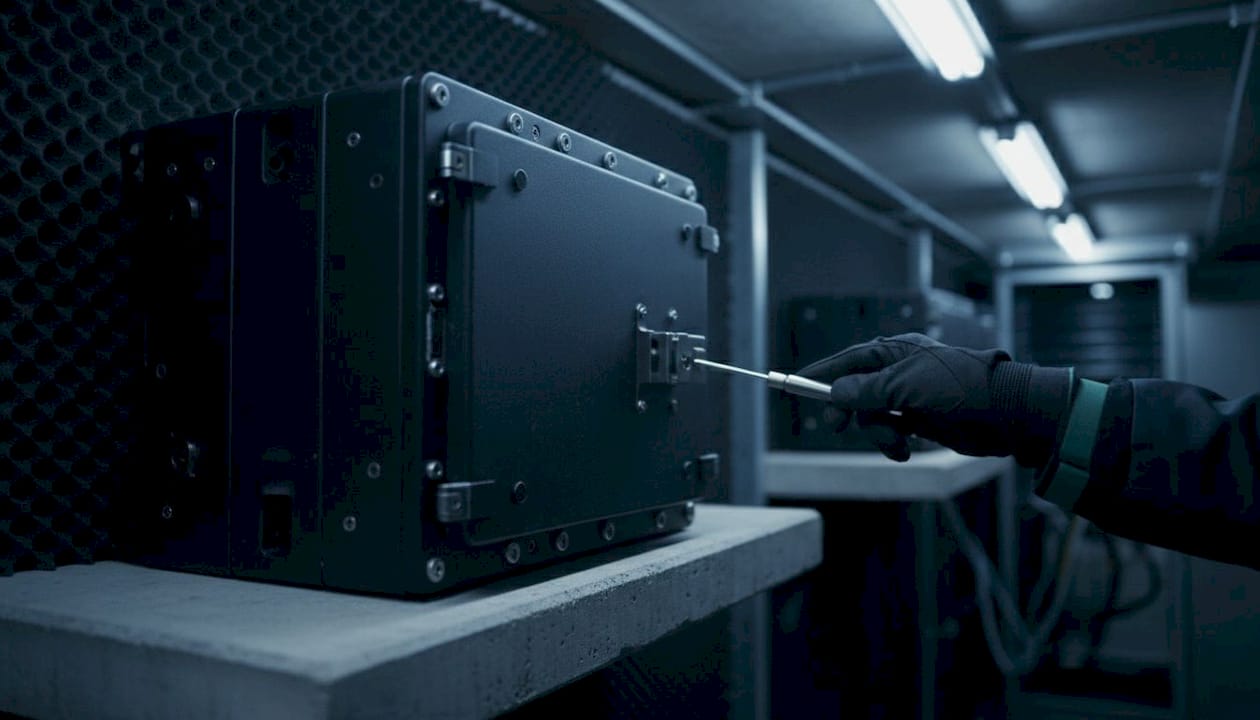
Key lifecycle management inside an HSM covers generation, storage, usage, and deletion. All of these operations happen within the hardware boundary. The HSM exposes a controlled API, typically PKCS#11, JCE, or CNG, so applications can request cryptographic operations without the key ever leaving the device.
Policy enforcement is where HSMs add governance value beyond simple key storage. Administrators configure M-of-N quorum authentication, meaning a transaction signing operation requires approval from multiple authorized operators before the HSM acts. This control directly mitigates insider threats and unauthorized automated access.
- Tamper-resistant enclosure triggers zeroization on physical attack
- Hardware-isolated key generation prevents plaintext key exposure to any software layer
- M-of-N quorum controls require multiple operator approvals for sensitive operations
- Controlled API access limits which applications can invoke cryptographic functions
- Full audit logging records every key usage event for compliance review
Pro Tip: Set CKA_SENSITIVE=TRUE and CKA_EXTRACTABLE=FALSE on every key object at creation time. Misconfigured key attributes are the most common source of accidental key export vulnerabilities inside an otherwise secure HSM deployment.
What regulatory standards mandate HSMs for digital asset security?
Regulatory frameworks that govern digital asset custodians, payment processors, and certificate authorities converge on HSMs as the required control for protecting high-value cryptographic keys. Understanding which standard applies to your environment determines both your minimum HSM specification and your audit obligations.
-
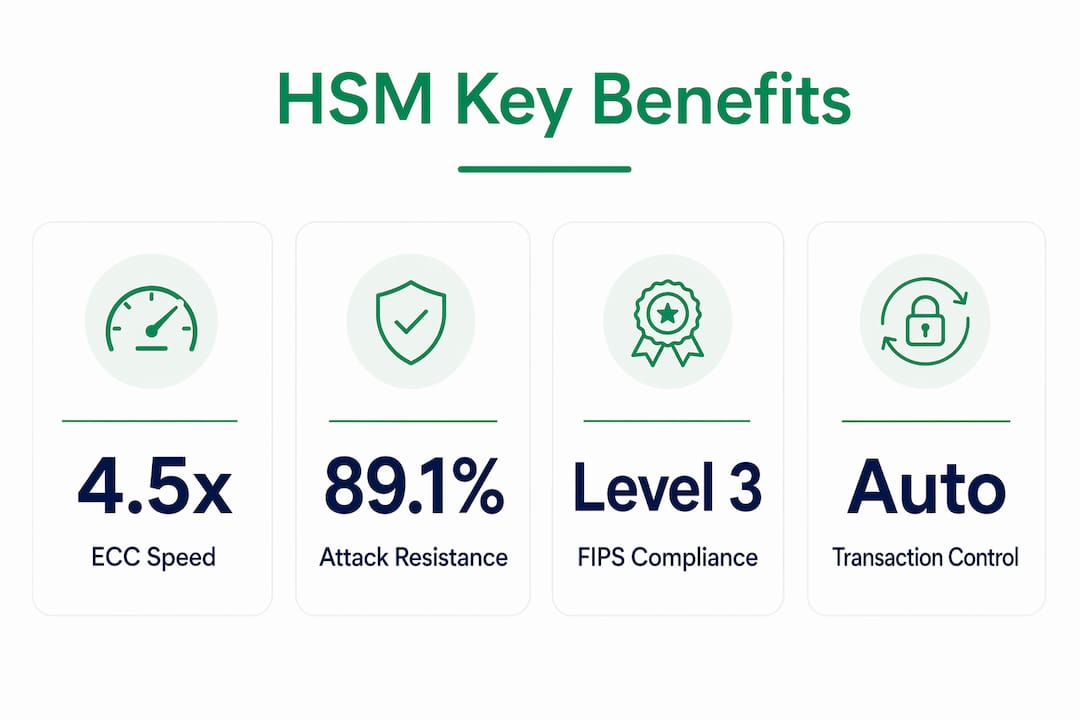
FIPS 140-2/3 Level 3 is the baseline validation required for enterprise HSMs in PKI and payment systems. Cloud HSM products frequently carry this validation, making it achievable without physical appliance ownership.
-
PCI DSS PIN block processing requires PCI PTS HSM certification in addition to general PCI DSS compliance. Cloud HSMs meet general PCI DSS requirements but do not satisfy PIN processing standards. Institutions handling cardholder PIN data must deploy PCI PTS-certified physical appliances.
-
CA/B Forum Baseline Requirements mandate that certificate authorities protect root and intermediate signing keys inside hardware cryptographic modules meeting FIPS 140-2 Level 3 or equivalent. Any organization operating a PKI for digital asset identity must comply.
-
eIDAS Qualified Electronic Signature Devices (QESDs) require that private signing keys be generated and stored in certified hardware. This applies directly to European digital asset platforms issuing qualified electronic signatures for transaction authorization.
-
Documented key ceremonies are required under most of these frameworks. A key ceremony is a formal, witnessed procedure for generating and loading master keys into an HSM. Regulators treat undocumented key ceremonies as a compliance gap regardless of the hardware used.
The compliance rationale across all five frameworks is the same. Software-based key management alone cannot provide the physical access controls, tamper evidence, and audit trails that regulators require for high-assurance environments. HSMs are foundational controls where software key management is insufficient for high-value keys.
How do HSMs improve operational resilience in digital asset infrastructure?
HSMs do more than protect keys at rest. They accelerate cryptographic operations and serve as the control plane for automated transaction signing in high-throughput digital asset environments. Understanding the performance and architectural benefits helps security teams justify HSM investment to finance and operations stakeholders.
HSM-enhanced architectures accelerate elliptic curve cryptography operations by up to 4.5 times compared to software implementations in multi-node digital currency systems. That acceleration matters for custodians and exchanges processing thousands of transactions per second. Offloading ECC signing to an HSM reduces latency without sacrificing security.
Attack resistance metrics from recent research are equally significant. Test pass rates remain at 89.1% under conditions with 30% malicious coefficients, and blocking rates for sophisticated attacks exceed 97%. Those figures confirm that HSM-backed architectures maintain integrity even when a portion of the network nodes are compromised.
| Capability | Benefit | Compliance Relevance |
|---|---|---|
| ECC operation acceleration | Up to 4.5x throughput improvement | Supports high-volume transaction signing |
| Tamper detection and zeroization | Keys destroyed on physical attack | Satisfies FIPS 140-2 Level 3 physical security requirements |
| M-of-N quorum enforcement | Prevents single-operator key misuse | Meets PCI DSS dual-control requirements |
| Full audit logging | Every key operation recorded | Supports regulatory audit and forensic review |
| MPC integration | Distributed key shares anchored in hardware | Meets high-assurance custodial regulator expectations |
Combining HSMs with Multi-Party Computation creates a defense-in-depth model that no single control achieves alone. MPC distributes key shares across multiple parties so no single node holds a complete key. Anchoring those shares inside HSMs adds hardware isolation to the distribution model. Regulators increasingly expect this combination for institutional custodial environments.
HSMs also serve as the control plane for automated transaction signing in continuous operations. Custodians configure the HSM with strict policies governing which wallets can sign, at what transaction value thresholds, and under what time conditions. The HSM enforces those policies at the hardware level, independent of any software override.
Pro Tip: When deploying HSMs for automated signing workflows, define transaction value limits and counterparty whitelists directly in the HSM policy configuration. Software-layer controls can be bypassed. Hardware-layer policies cannot.
Physical HSMs vs. cloud HSM services: what are the trade-offs?
The choice between physical on-premises HSMs and cloud-managed HSM services is a risk and control decision, not simply a cost calculation. Each model offers distinct security assurances and operational constraints that compliance officers must evaluate against their specific threat model.
Physical HSMs give your organization complete key sovereignty. Your team controls the hardware, the firmware, and the physical access environment. This model satisfies the most stringent payment standards, including PCI PTS HSM certification for PIN processing, which cloud HSMs cannot meet. The trade-off is operational overhead. Physical appliances require dedicated infrastructure, trained personnel for key ceremonies, and hardware lifecycle management.
Cloud HSM services reduce that operational burden significantly. Cloud HSMs offer compliant hardware-based key protection without physical appliance management overhead. Major cloud providers offer FIPS 140-2 Level 3 validated HSM services, making them suitable for most PKI, blockchain key custody, and general digital asset security use cases. The critical limitation is key location sovereignty. Your keys reside in infrastructure controlled by a third party. Cloud HSMs require analysis of key location sovereignty and vendor dependencies, which directly influences your compliance and risk posture.
Hybrid deployment models resolve many of these trade-offs. Organizations with mixed workloads often deploy physical HSMs for the highest-sensitivity keys, such as root CA keys and master wallet keys, while using cloud HSMs for operational signing keys that require geographic distribution and high availability. This model preserves key sovereignty where it matters most while reducing infrastructure costs for lower-sensitivity operations.
The compliance implication is clear. If your digital asset operations include access control practices governed by PCI PTS or equivalent national payment standards, physical HSMs are not optional. For all other use cases, cloud HSMs with FIPS 140-2 Level 3 validation provide a defensible compliance posture.
Key Takeaways
HSMs are the non-negotiable cryptographic trust anchor in digital asset security, providing hardware-enforced key protection, policy governance, and audit trails that no software control can replicate.
| Point | Details |
|---|---|
| Hardware isolation is mandatory | Software key management alone cannot meet FIPS 140-2 Level 3, PCI DSS, or eIDAS requirements for high-value keys. |
| Configure key attributes correctly | Set CKA_SENSITIVE=TRUE and CKA_EXTRACTABLE=FALSE at creation to prevent accidental key export. |
| HSMs enforce governance, not just storage | M-of-N quorum controls and transaction signing policies turn HSMs into active compliance engines. |
| MPC plus HSM is the institutional standard | Combining distributed key shares with hardware isolation meets regulator expectations for custodial environments. |
| Cloud HSMs have real compliance limits | Cloud services satisfy most standards but cannot meet PCI PTS PIN processing requirements. |
HSMs as governance engines, not just key vaults
I have spent years watching institutions treat HSMs as expensive USB drives. They deploy the hardware, generate the keys, and then leave the policy configuration at factory defaults. That approach wastes the most valuable capability an HSM offers.
The real shift I have seen in mature digital asset programs is treating the HSM as the governance engine for every cryptographic operation. HSMs are evolving into centralized control planes that enforce granular, verifiable usage policies and generate audit trails critical for regulatory compliance and disaster recovery. That is not a future state. It is available today in every enterprise-grade HSM on the market.
The institutions that get this right configure their HSMs with explicit transaction policies before a single key is generated. They define which application identities can invoke signing operations, at what value thresholds, and under what time windows. They run documented key ceremonies with external witnesses. They treat the HSM audit log as a primary compliance artifact, not an afterthought.
As AI-driven workflows automate more of the transaction lifecycle, the HSM becomes the last hardware-enforced boundary between authorized and unauthorized activity. AI-automated financial workflows require HSMs to enforce cryptographic policy boundaries at the hardware level. No software control provides that guarantee. The organizations building digital asset governance credentials today are the ones that will meet tomorrow’s regulatory expectations without scrambling.
My practical advice: audit your HSM key attribute settings this quarter. Then audit your policy configurations. Most teams find gaps in both within the first hour.
— Gregg
Wush DARE: structured readiness for digital asset security
Deploying HSMs correctly is a technical problem. Proving that deployment meets regulatory expectations is a governance problem. That is where Wush’s Digital Asset Readiness Evaluation addresses a gap that most security teams face alone.

The DARE certification covers custody controls, cryptographic key management practices, regulatory compliance alignment, and operational accountability frameworks. It gives security professionals and compliance officers a structured path from ad-hoc HSM deployment to documented, auditable governance. The program includes modular assessments, annual renewal to track regulatory changes, and blockchain-backed credentials that demonstrate institutional readiness to regulators and counterparties. For teams managing private key risk at scale, DARE provides the framework to close the gap between technical controls and compliance evidence.
FAQ
What is the primary function of an HSM in digital asset security?
An HSM generates, stores, and manages cryptographic keys inside a tamper-resistant hardware boundary, preventing plaintext key exposure to any software process or privileged user. It also enforces authentication policies and logs every key operation for audit purposes.
How does an HSM differ from a software key management system?
An HSM enforces key protection at the hardware level, making key extraction computationally infeasible and triggering automatic key destruction on physical attack. Software key management systems cannot provide equivalent tamper resistance or physical access controls.
Which compliance standards require HSM use for digital assets?
FIPS 140-2/3 Level 3, PCI DSS PIN processing via PCI PTS HSM certification, CA/B Forum Baseline Requirements, and eIDAS Qualified Electronic Signature Device standards each mandate or strongly recommend HSM-protected key storage for high-assurance environments.
Can cloud HSM services replace physical HSM appliances?
Cloud HSMs satisfy most compliance requirements including FIPS 140-2 Level 3 and general PCI DSS, but they cannot meet PCI PTS HSM certification for PIN block processing. Physical appliances remain required for the highest-sensitivity payment and custody operations.
What is the benefit of combining HSMs with Multi-Party Computation?
Combining HSMs with MPC anchors distributed key shares in hardware isolation, creating a defense-in-depth model that meets stringent regulator expectations for institutional custodial environments. Neither control alone provides the same assurance level.