
Digital Asset Impairment Testing Process: 2026 Guide

The digital asset impairment testing process is the procedure finance professionals use to assess and report reductions in digital asset value on financial statements under prevailing accounting standards. Two distinct models now govern this work: the legacy ASC 350-30 impairment model and the new fair value model introduced by FASB ASU 2023-08. FASB ASU 2023-08 mandates that qualifying crypto assets use fair value measurement, effective for fiscal years after December 15, 2024. Finance teams that fail to distinguish between these two models risk material misstatement, audit findings, and regulatory exposure. Understanding which model applies to each asset you hold is the first decision that drives every subsequent step.
What is the digital asset impairment testing process?
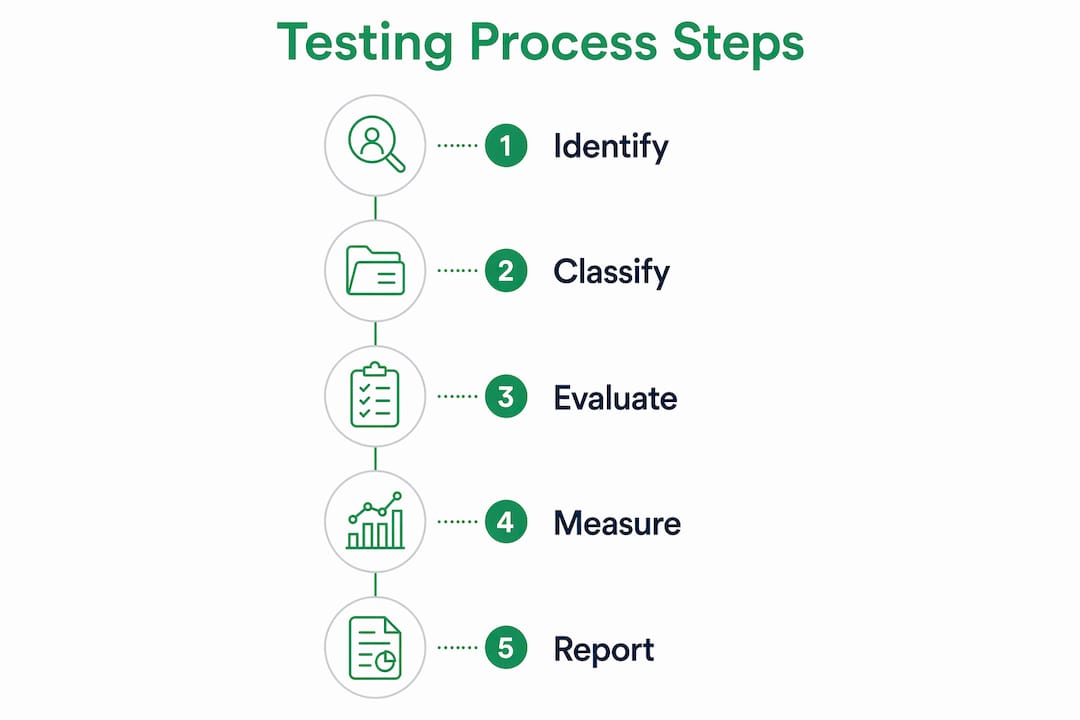
The digital asset impairment testing process determines whether a digital asset’s carrying amount exceeds its recoverable value and requires a write-down on the income statement. Under US GAAP, the applicable model depends entirely on whether the asset qualifies under ASU 2023-08 scope criteria. Assets that qualify move to recurring fair value measurement. Assets that do not qualify remain under ASC 350-30, which uses a one-step impairment test: identify indicators, measure carrying value, estimate fair value, and recognize impairment loss if the carrying amount exceeds fair value.
The shift matters because the two models produce very different income statement outcomes. Legacy impairment tests record only losses, never recoveries, creating asymmetric income statement impact. The fair value model records both gains and losses symmetrically each period. Finance teams need to understand both models to apply the right one and communicate earnings volatility accurately to stakeholders.

Which digital assets require impairment testing?
Asset classification is the gateway decision in any digital asset evaluation process. ASU 2023-08 applies to fungible crypto assets that are intangible assets under US GAAP, secured through cryptography, and do not give the holder a claim on underlying goods, services, or other assets. Bitcoin and Ether are the clearest examples of in-scope assets. NFTs, wrapped tokens, stablecoins backed by fiat, and tokenized securities generally fall outside the scope and remain under ASC 350-30.
The table below summarizes how asset type maps to accounting model.
| Asset category | Typical scope status | Applicable model |
|---|---|---|
| Bitcoin, Ether (fungible, no underlying claim) | In scope | ASU 2023-08 fair value |
| NFTs | Out of scope | ASC 350-30 impairment |
| Wrapped tokens | Out of scope | ASC 350-30 impairment |
| Fiat-backed stablecoins | Out of scope | ASC 350-30 impairment |
| Tokenized securities | Out of scope | ASC 350-30 impairment |
Maintaining a current asset inventory with scope classifications is not optional. Markets introduce new token structures regularly, and a token that was out of scope last year may need reassessment this year. Build a periodic scope review into your quarterly close process. A well-maintained asset tracking framework reduces the risk of misclassifying assets and applying the wrong model.
How do you perform impairment testing under ASC 350-30?
The legacy impairment test applies to out-of-scope digital assets and follows a defined sequence. Each step must be documented to satisfy auditors.
- Identify impairment indicators. A significant price decline mid-period, adverse regulatory action, or loss of market access all qualify. A material price decline mid-period is an impairment indicator requiring immediate evaluation, not only at quarter-end.
- Determine the carrying amount. Pull the asset’s book value as of the evaluation date, net of any prior impairment charges.
- Estimate fair value. Use the ASC 820 fair value hierarchy. For actively traded assets, Level 1 quoted prices apply. For less liquid assets, use Level 2 or Level 3 inputs with documented assumptions.
- Compare carrying amount to fair value. If fair value is below carrying amount, an impairment loss exists.
- Record the impairment loss. Write the asset down to fair value and recognize the difference in net income. Impairment losses are not reversible under this model, even if the asset’s market price recovers later.
- Document the analysis. Record the indicator identified, the valuation method used, the inputs applied, and the conclusion reached. Retain all supporting data for the audit file.
Common impairment triggers finance teams must monitor include:
- Exchange delistings or trading suspensions
- Regulatory enforcement actions targeting the asset
- Issuer insolvency or project abandonment
- Price declines exceeding a defined threshold between reporting dates
- Loss of custody access or key management failure
Pro Tip: Set automated price alerts at a defined threshold below carrying value for every out-of-scope asset you hold. Waiting for quarter-end to check prices is the single most common compliance failure under ASC 350-30.
How does the FASB ASU 2023-08 fair value process work?
The fair value measurement process under ASU 2023-08 replaces periodic impairment testing for qualifying assets with recurring measurement at each reporting date. The steps below apply to in-scope assets.
- Confirm scope. Verify the asset meets ASU 2023-08 criteria at each reporting period. Token structures can change.
- Apply the ASC 820 fair value hierarchy. Level 1 inputs are quoted prices in active markets and are preferred. Level 2 inputs are observable but not direct quotes. Level 3 inputs are unobservable and require documented assumptions and often specialist valuation support.
- Record the transition adjustment. At adoption, record a cumulative-effect adjustment to opening retained earnings for the difference between carrying amount and fair value. Prior periods are not restated.
- Measure fair value at each reporting date. Pull the closing price from a principal market or the most advantageous market available. Document the source.
- Recognize unrealized gains and losses in net income. Fair value changes are recognized symmetrically in net income each reporting period. Both upward and downward movements hit earnings.
- Prepare disclosures. Include asset categories, fair value rollforwards, and any restrictions on the asset.
Valuation specialists are often necessary for Level 3 asset valuations where market illiquidity or distressed conditions complicate inputs. Failure to adjust for those conditions is a leading cause of audit corrections.
Pro Tip: Build a pricing source policy before your first reporting date under ASU 2023-08. Define which exchange or data provider constitutes your principal market for each asset, and document the rationale. Auditors will ask.
Transitioning to fair value measurement also requires adjusting internal controls and preparing stakeholders for earnings volatility. Unrealized gains and losses now flow through net income every period. That is a material change in how digital asset holdings affect reported earnings, and boards need to understand it before the first filing.
What documentation and disclosure practices reduce audit risk?
Implementing fair value measurement requires governance-intensive processes that directly affect audit scrutiny and disclosure quality. Documentation is not a back-office task. It is the primary evidence your auditor will review to form an opinion on your digital asset balances.
Finance teams should maintain the following for every impairment or fair value assessment:
- Scope determination memo confirming whether each asset qualifies under ASU 2023-08 or remains under ASC 350-30
- Valuation methodology documentation specifying the hierarchy level used, the pricing source, and the rationale for that source
- Fair value rollforward schedules showing opening balance, purchases, disposals, unrealized gains and losses, and closing balance
- Impairment indicator log for ASC 350-30 assets, recording dates, triggers, and conclusions
- Exception handling records for any period where the standard pricing source was unavailable or adjusted
- Reconciliation between subledger and general ledger for all digital asset positions
Disclosures in the financial statements must cover asset categories held, the fair value measurement approach, any restrictions on assets, and the income statement line where gains and losses are recognized. Thin disclosures are a red flag for auditors and investors alike. The digital asset disclosures guidance published by Wush provides a practical framework for building disclosure packages that satisfy both auditors and regulators.
Finance teams that invest in digital asset financial controls before an audit, rather than during one, consistently report fewer findings and faster close cycles.
What are the most common pitfalls in asset impairment analysis?
Most errors in the digital asset impairment testing process fall into a small number of repeatable patterns. Recognizing them early prevents restatements.
| Pitfall | Corrective action |
|---|---|
| Checking prices only at quarter-end for legacy assets | Implement continuous monitoring with threshold alerts |
| Using unadjusted Level 3 inputs for illiquid assets | Engage a valuation specialist; document market illiquidity adjustments |
| Missing the transition adjustment at ASU 2023-08 adoption | Reconcile carrying amounts to fair value at adoption date; record cumulative adjustment |
| Thin or missing impairment indicator documentation | Maintain a dated indicator log for every out-of-scope asset |
| Applying the wrong model to a newly acquired asset | Run a scope test at acquisition and at each reporting date |
Volatile market conditions create a specific risk for Level 3 valuations. Adjusting Level 3 valuations to reflect distressed market conditions is a common challenge that frequently triggers auditor scrutiny. Finance teams that rely on unadjusted model outputs without considering market stress often face significant audit corrections.
Pro Tip: Run a dry-run impairment analysis one month before your fiscal year-end. It surfaces data gaps, pricing source issues, and documentation weaknesses while you still have time to fix them.
Key Takeaways
The digital asset impairment testing process requires applying either the ASC 350-30 legacy model or the ASU 2023-08 fair value model based on asset scope, with governance-quality documentation supporting every conclusion.
| Point | Details |
|---|---|
| Scope classification drives model selection | Classify each asset as in-scope or out-of-scope under ASU 2023-08 before applying any valuation method. |
| Legacy model losses are permanent | Under ASC 350-30, impairment write-downs cannot be reversed even if market prices recover. |
| Fair value hits net income symmetrically | ASU 2023-08 requires recognizing both gains and losses in net income each reporting period. |
| Continuous monitoring prevents compliance failures | Monitor impairment indicators between reporting dates, not only at quarter-end, for out-of-scope assets. |
| Documentation quality determines audit outcomes | Maintain scope memos, pricing source policies, rollforward schedules, and exception records for every asset. |
The paradigm shift finance teams are still catching up to
The move from impairment-only accounting to fair value measurement is one of the most significant changes in digital asset accounting in years. I have watched finance teams treat it as a disclosure update when it is actually a process overhaul. The income statement now moves with the market every single reporting period for qualifying assets. That changes how you communicate with boards, how you set earnings guidance, and how you design internal controls.
The teams that handle this well share one trait: they built their governance infrastructure before the first filing date, not after. They defined their principal markets, documented their pricing sources, and trained their staff on the new model months in advance. The teams that struggled were the ones that assumed their existing intangible asset processes would transfer cleanly. They do not.
I also think the profession underestimates how much the Level 3 valuation challenge will grow. As enterprises hold more diverse digital assets, including less liquid tokens and structured products, the demand for specialist valuation expertise will increase sharply. Finance teams that build those relationships now will have a real advantage when auditors start asking harder questions.
The board-level oversight expectations for digital assets are also rising. Boards want to understand valuation methodology, not just the final number. Finance leaders who can explain the ASC 820 hierarchy and the governance around it will earn credibility with their audit committees.
The regulatory environment will keep evolving. Building a process that is well-documented and auditor-ready today means you spend less time scrambling when the next standard update arrives.
— Gregg
Wush DARE certification for impairment testing readiness
Finance teams that want to validate their digital asset accounting practices against current standards have a structured path available.
Wush offers the DARE certification (Digital Asset Readiness Evaluation), a modular program built for finance professionals, treasury teams, and risk managers working with digital assets. The program covers impairment testing frameworks, fair value governance, documentation standards, and audit readiness across the full digital asset lifecycle. DARE helps teams identify gaps in their current valuation and impairment processes before auditors do. The credential is blockchain-supported and renewed annually to stay current with evolving standards like ASU 2023-08. For finance teams building or strengthening their digital asset accounting practice, DARE provides a clear benchmark for where your process stands.
FAQ
What triggers an impairment test for digital assets?
A significant price decline, exchange delisting, regulatory action, or loss of custody access all trigger impairment evaluation under ASC 350-30. Finance teams must monitor for these indicators continuously, not only at period-end.
How often must digital assets be tested for impairment?
Under ASC 350-30, impairment testing is required at least annually and whenever an impairment indicator occurs mid-period. Under ASU 2023-08, qualifying assets are measured at fair value every reporting date without a separate impairment test.
Can an impairment loss on a digital asset be reversed?
No. Under the legacy ASC 350-30 model, impairment losses on digital assets are permanent and cannot be reversed even if the asset’s market price recovers in a later period.
What is the ASC 820 fair value hierarchy?
ASC 820 classifies fair value inputs into three levels: Level 1 uses quoted prices in active markets, Level 2 uses observable but indirect inputs, and Level 3 uses unobservable inputs requiring documented assumptions and often specialist valuation support.
When did FASB ASU 2023-08 become effective?
FASB ASU 2023-08 is effective for fiscal years beginning after December 15, 2024. Entities adopt it using a modified-retrospective approach, recording a cumulative-effect adjustment to opening retained earnings at the adoption date.